Showing posts with label Action. Show all posts

Monday, June 3, 2013

Buckets of Dice 2013

This weekend I attended my first ever Buckets of Dice, a roleplaying and boardgaming convention held in Christchurch, New Zealand.  I had been wanting to get down to Buckets for a while, but this year, the opportunity to combine a trip to the ‘con with family commitments and also showcase EPOCH, was too good to pass up.

The organisers were also nice enough to list me as a ‘special guest’ and promote both my EPOCH scenarios and have me facilitate a panel discussion on game publishing.

I understand the ‘con attracted around 50 registrations, although that included both board-gamers and roleplayers.  Initially it proved a little tricky to find the venue, nestled amongst the sprawling University of Canterbury campus, but thankfully there were many chalk arrows which helped guide me to the right place.  The people I spoke to before, during and after the ‘con were all very friendly, and made me feel very welcome, and it was good to see, and catch-up with some familiar faces from Kapcon.

Round 1 – EPOCH: Hard Time
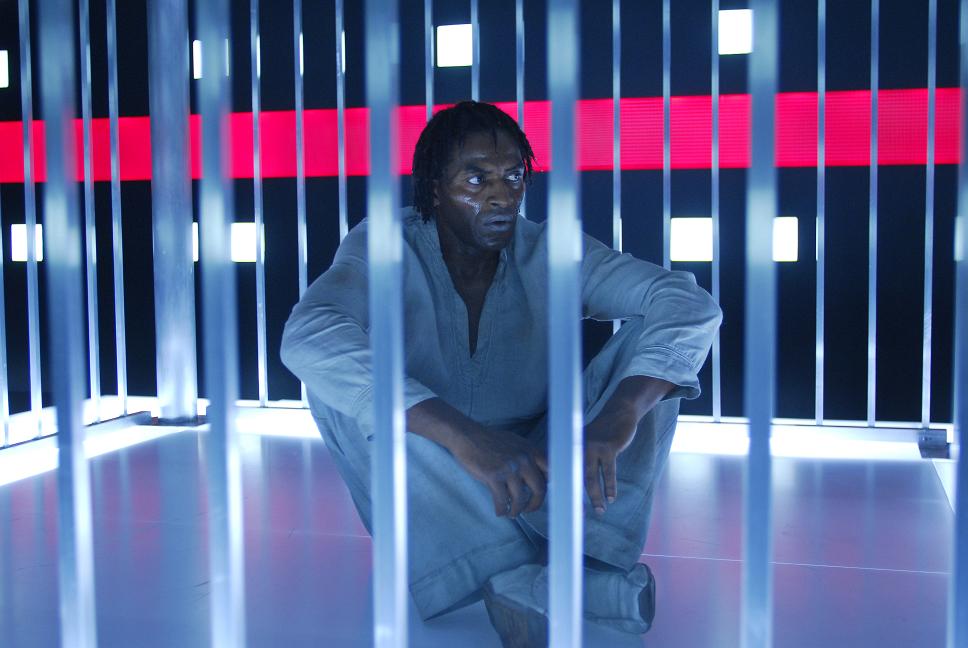
I initially pitched 4 EPOCH scenarios before the ‘con, and brought the full catalogue and offered the players the choice of any scenario they wanted.  After some discussion the popular vote was for science fiction, and Hard Time was the preferred option.  Some interesting characters were generated, although many of the characters on this run began as hackers – however, as the game went on the characters became more involved with the fiction until they determined that two of them had been responsible for Project LAZARUS, which had unleashed the source of the horror on all the prisoners. 

I love it when players do this kind of thing through flashbacks because I think it really enhances the mesh between character and scenario, while bringing in new ideas and fresh twists.  Of particular note in this run was one character played the Hero twice (through taking back a second Hero/Zero card after winning a ballot) so ultimately doomed their character to elimination in the last challenge through selfless sacrifice.

Panel on Game Publishing
Much like the discussion that took place at Kapcon, this was a round-table discussion about lessons, pitfalls and opportunities involved in self-publishing role playing games.  Attendance was light, but there was some clear interest, and enthusiasm for exploring the new opportunities that the current market offers.

Round 2 – The Company
I signed up for this game as it was one of the few with free spaces following round 1.  The game used Apocalypse World (which seemed to be extremely popular with con-goers – almost all the other games on offer used AW or an AW hack).  However, there was a neat science fiction twist – the game was set on Pluto in a highly bureaucratic civilisation which imposes crippling taxes on its people (the setting was borrowed from a 1977 Dr Who story called The Sun Makers).  I played a skinner called Dodge and spent most of my time trying to keep the other characters from coming to blows, while seeking some escape from the tedium of a system which charged a daily breathing tax.

We spent a fair bit of time on trying to acquire the finer things – probably half an hour trying to leverage enough funding to purchase an apple, before delving into who was really pulling the strings of the company.  The scenario ended with a bang when we confronted the inhuman villain behind the scenes and ignored his warnings, pressing a button which doomed the entire civilisation.  It was a fun time, although I think Apocalypse World wasn’t an easy mesh with the aims of the scenario.  Given the complexity and detail of the setting, I think pre-generated characters with embedded knowledge and agenda might have provided stronger direction to fulfil the GM’s vision for this scenario.  Equally, an investigative system like BRP or Gumshoe might have better supported the characters attempts to find clues and interact with the Company hierarchy. That said, I had fun and really enjoyed the other players take on their characters.

Round 3 – EPOCH: Hard Time
I was ready to run almost anything, except Hard Time again.  However, on day 2 when I put it to the players they were again keen on science fiction, and had heard good things about the run of Hard Time from the day before – so away we went!  This run had some characters who took really different directions, leading to some rich flashbacks and some intense in-character confrontations.  There was a Prison Break style story, with one character being sent to rescue another inmate, only to discover at a crucial moment that the other character was an android replacement… 

Another of the characters was a space pirate, previously abducted by aliens, while yet another was a clone who had rejected his corporation-specified genetic programming.  This character led to many trailer worthy moments including his memorable refrain: “How can this fu*king sh*t get any fu*king worse?” Really, really great fun, with another suitable epic ending. 

Overall I really enjoyed my time at Buckets of Dice, and if the opportunity presented, I’d definitely go again.  I also enjoyed introducing EPOCH to new players and seeing how folks interacted with the game in their own ways.

Monday, January 21, 2013

Kapcon 22 - Part One

Last weekend I attended Kapcon 22, which features a wide array of tabletop, on demand and LARP games.  This year I had agreed to run EPOCH for 3 rounds, including the informal late-night round, as well as running my light hearted professional wrestling game in the final round, and participating in a panel discussion on game publishing.  That left me with 2 rounds to play games, if I wasn’t needed for surge protection.

Several other GM’s had brought EPOCH scenarios to run at Kapcon (all of which I hope to publish in due course).  To try and help generate some player interest Grant and I had made sure there were a large number of posters spread around the ‘con.  I also added the infamous EPOCH bodycount score, to track character eliminations round-by-round and I brought a few other materials like dark tablecloths and system overview sheets. 

Round 1 - Precinct ‘77 
This was the second installment in Marcus’ 70’s cop TV show game.  The premise is simple – you are police detectives in Empire City with the characters representing era stereotypes and being partnered up.  The game is a sandbox, with the PC’s supplied a large list of informants and then determining how they will investigate several linked crimes.  I had fun playing this game, and thought the freedom of the setup was great. 

There was, probably, too much information for me to easily absorb up-front, which meant the start was a little slow.  I think that this game would benefit from a pre-credits action start (a car-chase or similar) where the characters learn the system and start defining their characters a little, before commencing the investigation phase and consulting their files. 

With only 4 players, and a sandbox setup, I also think that there is a risk that energy levels across the game might be a little uneven.  More players means less screen time for each, but also should also help even out the energy across the game.   I think Precinct ’77 is a solid game, and I hope to see another instalment at future ‘cons. 

Round 2 - Fever Pitch 
Fever Pitch is a very simple and flexible EPOCH scenario, but the strength of the scenario really depends on working to build the characters and their relationships in the first tension phase.  I had a full allotment of 6 players for this game, only one of whom had played EPOCH before.  I used the Colleagues relationship group as I think it’s a good fit for Fever Pitch, and the characters invariably ended up resembling a more extreme cast of the Office – which was awesome. 

We spent nearly 1.5 hours on the first tension phase, and I was very pleased with the office dynamic, which was suitably dysfunctional.  All of the characters were memorable, from Jan-Yves panicked office manager to Andy Mac’s closet survivalist, to Jonathan’s mellow hippie to Steph’s peppy girl who was sleeping with the CEO.

The highlight for me came when it was revealed that Anna’s up-and-coming saleswoman was actually an undercover government agent who had abandoned her assignment out of love for the dweeby office support worker, played by Ants.  Unfortunately Ants’ character suffered terrible deep fryer burns to the face, and was run over and killed soon thereafter, making it a tragic love story.  Jonathan’s final twist that his unbelievably laid-back character was actual a member of a doomsday cult added a nice final touch to the game.  Great fun! 

Round 3 - Getting Your Game Published Panel Discussion 
This was a useful and enjoyable discussion on the subject.  Attendance was light with panellists outnumbering  audience, and so it moved into more of a round table discussion covering issues from motivations, writing, editing, illustrating and promoting your game, scenario  or LARP.  I did my best to highlight my experiences to date, although at one point I was accused of being a shill for DriveThruRPG, so perhaps using a single channel for sales has coloured my perceptions somewhat. 

There was a general feeling that NZ games and game writers should be more active in supporting one another, but it was not clear what vehicle might be suitable, or what value this would add.  While I did feel that it was a good use of time, I doubt I’d give up an entire round of gaming to participate in such a discussion again.  To that end I’ve suggested that there be some shorter panel discussions between the gaming rounds in future to increase attendance. 

Round 3.5 - EPOCH After Dark 
There were initially some concerns about scheduling for this round, as it seems that many people didn’t bother filling in a selection form on the basis that the previous 3.5 rounds have been fairly informal.  It is a hard balance to strike as it’s important not to draw people out of the Flagship LARP, but it would be nice to be  a bit more organised so the GM’s can be prepared.

As it turned out there were 5 folks who were keen to play EPOCH, some old hands at the game, like Mash, Liam and Marcus, plus recent EPOCH converts including James and Theo.  At the last minute Freya was also convinced to join the game, and so we embarked on the first playtest of my EPOCH Sci-Fi scenario Hard Time.

The scenario casts the characters as prisoners sharing living arrangements on the new, high-tech prison facility the Albert Reiss which currently orbits Phobos, a moon of Mars.  The paint was still wet on the scenario as I’d only completed the first draft on Friday and so some of the scenes revealed the need for a little more thought to establish detail and logic.

As I’d hoped the players created a wide range of criminals, from Liam’s very scary cannibal (so scary he was zeroed twice in the first challenge round) to art thieves, con-men and the victims of far worse crimes.  The scenario seemed to have the right level of tension, distrust and drama.  Things came to a head in a final player-initiated conflict which led to the abrupt and shocking murder of Marcus’ character who was only a few feet from freedom.  A great ending, and a very fun game.

 To be continued... 

Previous Kapcon Reports:


Saturday, January 5, 2013

Leaving Nothing To Chance

As I prepare for Kapcon this year, I’ve noticed something different.  No dice.  That is to say, for the first time I can remember, none of the games I’m running use dice of any kind.  Thinking about the absence of this gaming staple, led me to reflect a little on the role of chance in a ‘con scenario.

Chance features in two main ways in old-school convention games.  The first is through investigation, with the GM offering information to characters via a successful skill roll – everything from “can I track the orcs through the forest?” to “can I tell if he’s lying?”

The problem with employing chance to investigation in a convention game is that the GM almost always wants the players to get the information they are seeking.  In 3-4 hours there is precious little time for false leads, or stonewalling.  It kills time, frustrates the players, and, at worst alienates them from the scenario.  

Of course, there are ways around this.  One is to skew character skills so they are very likely to succeed in critical areas – although this begs the inevitable question of, what happens if they should fail against the odds?  Another is to frame it differently, by changing the question from a binary information/no-information response, entirely dependent on luck, to providing degrees of success or levelling a time cost or similar for failure depending on the roll.  This tends to work best when the stakes are explained before the dice are rolled, and often involves a degree of impovisation by the GM.

The GM can also make the dice roll a fiction, and simple provide the information either way, which, if the players catch on, may lead to the perception that the system is little more than a camouflage for GM fiat.   

The second manifestation is in combat or action scenes.  These raise the stakes, as the result of a failed roll is more likely to be transparent to the players.  Theoretically a character may be killed, or suffer a catastrophic injury through a series of rolls.  As few GM’s are willing to allow characters to be eliminated early during a scenario, this often leads to similar responses to those I outlined previously.

In addition, the GM screen provides a way for the GM to disguise, or change results ‘in the interests of the story’.  In addition to potentially eroding player trust, this also has the disadvantage of camouflaging the role of luck in the game, which can really add to the flow of a game, and is often a leading source of stories told by players about the game afterwards.

Some games, like the Gumshoe system, have tried to separate these areas, guaranteeing players the clues in the investigative phase of the game while keeping an element of chance in action or combat.  Other, more modern games encourage more negotiation or narration from the players, to get at the essence of what lies behind a roll, and bring the outcome back to a broader context of characters and story.

I’ve used pretty much every technique I’ve described at one point or other over the years, including trying Gumshoe to split out the uncertainty of investigation.  This Kapcon I’m running almost exclusively EPOCH scenarios, where the players collectively make all the key choices.  Investigation is optional and as GM I have considerably less say on which characters are eliminated, and when, then any of the players due to the role of the Hero/Zero cards.  My only special power comes in breaking any potential ties in an audience ballot.  And I don’t think I’d have it any other way.  Chance can add a lot of spice to a convention game, but like any seasoning too much or too little has the potential to spoil the overall effect.

Sunday, October 30, 2011

Fright Night V

Okay, I’m interrupting my post on how I write ‘con games to detail my attendance at Fright Night 5, which happened this past weekend. But fear not solitary subscriber – I have included some detail about my creation of my ‘con scenario below which I will develop further in a subsequent post.

This was the fifth instalment of Fright Night, a one-night horror-con. I was facilitating Fright Night I, out of the country for Fright Nights II & III and posted about Fright Night IV here and here.

Round 1 – Miller’s Children
I signed up to play this game as the blurb sounded interesting, and Donna has often signed up to play in my games, and I thought it was high time to return the favour. I was given the character of Robbie to play, the oldest sibling, and something of a delinquent in a scenario which is very much 'Home Alone', with a magical twist.

I must give full credit to the other players. Ellen was a fantastic Carol - Robbie’s sister whose birthday was ruined. She was suitably annoying and particularly good at embarrassing Robbie. Stephanie did a great job with Krystal – Carol’s friend who had a little crush on Robbie, and constantly feuded with little Jamie (played by the effervescent Mike F.). Their feuding was totally hilarious and threatened to obscure the horror elements. Mike F. also deserves special credit for being disarmingly good at portraying a 7 year old and unexpectedly adding some sentimental sweetness to proceedings.

The scenario was good fun, we enjoyed the setup, although we may have caught Donna out with a few of our wackier ideas. The climax was a little frustrating for me, as I wasn’t in a position to really influence events, but it all ended well (in that we likely wound up in foster care). The scenario ran a little over two hours, so I decided to venture out for coffee and a little fresh air before launching into my game in the second round.

Round 2 – Sundown
This is the game I’ve been writing over the last few weeks. At this juncture I should point out that I decided to write this game as a Cthulhu adventure, which means it should to conform to a couple of conventions I’d probably not apply to a scenario for my own system:

1. There needs to be an investigative component. Cthulhu has always prided itself on offering the dual attractions of both appealing to problem-solvers and horror fans, potentially giving satisfaction on both levels.

2. There should be some reference to the Mythos – usually this is in the form of a Mythos entity encountered in the final scene of the adventure.

3. There should be a way of defeating said Mythos creature, or other villains, which transcends physical force.

4. There should be player handouts of some description.

Of course, you could throw all of these things out the window – but as I had decided to write this adventure as a scenario I’d like to publish, I decided that I’d try and incorporate these ideas to varying degrees, as well as using traditional pre-generated characters with a blurb, rather than employing my contemporary ideas about using framing scenes and objects to allow for greater player buy-in.

With this in mind I wrote up 8 pre-generated characters, folks from Tombstone who ride off in a posse to hunt a man that has committed a terrible murder. I put a bit of effort into creating come character tensions (with the obvious expectation that these may come to nothing if the players chose to ignore them) and then tried to tie as much of the scenario as I could into actual history and events of this era (another common element of Cthulhu scenarios). As this is a ‘con outing, it is actually a fairly traditional railroad – so I also created a couple of floating scenes to allow the players to choose to deviate from the expected path, and then hopefully choose to return to it.

The playtest went fairly well. The inter-character drama proved to be pitched at about the right level. The players seemed to enjoy the climax, and while some complained it seemed a little tough, I think it was an overall success. The playtest revealed several elements that I hadn’t paid enough attention to in the drafting, and I found that by refining these, the game looked a lot better. That said, I knew I couldn’t trust the playtest as these were players I run games for regularly, experienced Cthulhu players who knew the score and conceit of the genre and were willing to embrace it, as well as being fairly comfortable at playing together as a group.

On the night I was down to 4 players. Something I didn’t initially think would be a problem, but as I looked through the pre-generated characters I realised that I had linked them together more thoroughly than I had intended, and that the game would be so much richer if I could beg or borrow another couple of players. Fortunately Marcus was able to oblige me with Hannah and Ants, who were attired as zombie pirates! This was particularly fortuitous as I had arranged individual touch lights for illumination and the zombie make-up looked terrifying in the darkness, lit only dimly from beneath.

Just as we were about to start, Ants told me this was to be Hannah’s first ever tabletop roleplaying experience – and that I’d better not mess it up! Needless to say, I felt the pressure acutely (also, being threatened by a zombie pirate is scary stuff!).

The game went well. I think it was a richer and more dramatic run then the playtest (which is saying something as the playtest was pretty dramatic). The credit for this rests with the players who really embraced their roles. Bryn was fantastic as the bumbling doctor (blame the dice!) and put up with my comedic spotlighting with good humour, while Hannah did a great job as Marion, adding the memorable syphilis needles and ground-up turtle which I’ll definitely include in the published scenario. Scott, Mike and Ants really came through with their conflict, and even found a way to act heroically – which ultimately sealed their fate. I also really enjoyed the characterisation that Stephanie put into the School mistress, who she played almost exactly he way I had envisaged the character. I really enjoyed the game, and felt the story went almost exactly as I had hoped, and interestingly, mirrored the playtest almost exactly in structure and execution.

Now to write it up and get it published somewhere.

For further Fright night coverage see Luke's post here, Mash's post here, or Marcus' post here.

Thursday, July 21, 2011

Masks

Tonight I finished running the epic Masks of Nyarlathotep campaign for Call of Cthulhu. It’s not the first time I’ve run it – in fact it’s the third time – but it’s the first time in more than a decade I’ve revisited this Cthulhu classic, and I thought I’d share my approach and reflections.
I describe Masks as the James Bond Call of Cthulhu campaign. It features half a dozen exotic locales, improbable villains, deadly threats, all based around a fairly tenuous plot. In short – it is a blockbuster with all the good and bad that entails. The problem with this setup is the lethality of the campaign as written – I usually end up with a box full of character sheets donated by all the players whose characters have died or gone insane during the course of the campaign. Such a high character turnover can have negative impacts, stretching the already weak continuity of the chapters, diminishing player investment in characters, or even initiating ‘the Indiana Jones effect’.


To be fair to Masks, you have to consider the context of the campaign. It was written in 1984, when the gaming world was dominated by modules featuring monsters, treasure and dungeons. It added investigation, glamour and unusual encounters to this framework, even allowing the players to determine the order in which they resolved the chapters of the campaign. Since it's first edition it's had a whole chapter added along with a plethora of entertaining side adventures. Nevertheless, while innovative for its time, the campaign still has its fair share of linear plots, railroads and dungeons. In short - Masks is an imaginative classic that set the benchmark for all subsequent Cthulhu campaigns and continues to attract new Keepers, despite suffering from most of the pitfalls of old-school games. Judging by posts on the Yogsothoth forum there is pretty much at least one Masks campaign happening at any given time, someplace in the world – probably a lot more than that. The oft discussed fan-written Masks Companion has been years in the development and will apparently weigh in at more than twice the size of Masks.

As a GM, when facing the fairly harsh setup of Masks, you have three choices: play it straight and butcher a lot of PC’s; pull your punches and effectively run a watered down version of the game; or, change the game setup to support the campaign style. This run I chose the last option. I wanted more-or-less one set of characters to run through the campaign. I wanted to keep the continuity and play a style of game that supported the tenuous leads and unremitting, escalating and overwhelming danger of the campaign. So I designed the Pulp Cthulhu rules to support this style of game.


Players received an open cheque to create their characters – I wanted over-the-top characters and was willing to consider anything. Most players received a special advantage based on whatever background they came up with, all had the option of starting with Cthulhu Mythos and spells and everyone started with 1D3 Fate Points. Each fate point could be spent to avoid a catastrophic wound, reduce the impact of temporary insanity or gain 2D6 sanity points between chapters with an appropriate narration. In addition each Fate Point would generate a fortune point each session, which could be used to re-roll any failed skill check or automatically pass a luck roll. Characters gained 1 Fate Point for each chapter of Masks they completed.


Because I expected the characters would be a lot tougher I also introduced the major wound rule from Basic Roleplaying, which meant serious injuries would have consequences both in terms of stats and story for the characters, despite their hardy natures. And this system worked very well – we had a sorry collection of severed noses, horrific burns, major muscle damage and scars by the end to add plenty of colour to the characters journey.

All in all, it was immense fun. I greatly enjoyed the characters and the game, and loved traversing the familiar terrain of his campaign through a setup and system that better supported the game than in my previous outings. Many thanks to all the players who helped bring this game to life.

Campaign Statistics
Sessions Played: 16
Chapters: 7
Number of Players: 7
Number of Characters: 8 (plus Bullit the dog)
Total Fate Points Expended: 39
Fate Points Expended in Final Session: 12
Character Deaths: 0


EDIT: You can check out a players perspective of this campaign over at Andy's excellent blog.

Thursday, April 28, 2011

Fast and Furious

I thought I’d post a couple of thoughts of my views on running action sequences in a game. I think action can be a powerful tool, and a great way to bond PC’s and pump out some intense collaborative material which can really help to flavour the characters. I’ve seen combat run in a protracted way, like a wargame, and I’ve seen it run as a fully adversarial experience – I think both extremes are missed opportunities, so here are my tips on how to give the action sequence the kind of punch it needs.

1. Fast, fast, fast. Most fights in roleplaying games take place in seconds, so it’s important to try and convey the frantic intensity of this experience. Stay standing while you run action, even move around a little to get the blood pumping. Use an initiative track so you can hurry from player to player and urge the players to make decisions as quickly as possible to emphasise brevity.

2. Describe, repeat, then take another angle. For some reason I’ve found that 3 is the magic number of times it takes for people to strongly visualise an action sequence. Take this example from my recent Masks game:

Player 1:” I strike the cultist for 7 points of damage with my sword.”
GM to player 1: “The cultist turns to run, then you ram the sword through his back as he’s in the doorway and kill him”
GM, to player 2: “You reach the doorway and are confronted by a frantic looking man, suddenly the glinting end of a blade appears in the centre of his chest and you are showered in gore.”
GM to everyone: “Down the corridor a woman has her key out to unlock her door, holding a bag of groceries. At the sound of the commotion, she looks down the corridor and sees the cultist impaled on a sword – for a moment her eyes meet the eyes of [player 2’s character] whose face is now covered in blood, then she screams and drops her groceries.”

You don’t need to use this technique for every action, but it will help for major or significant actions within the combat, and reduce the chance that players haven’t understood or heard what has happened.

3. Emphasise the gore. Violence is terrible and has consequences. Be ready to describe horrific injuries and their impact on NPC’s or even PC’s. Making the hit point loss into a tangible injury helps to emphasise the reality, and the stakes for the PC’s and also helps to de-glorify combat. If you’re not used to this sort of thing consider importing a simplified critical table from another game system.

4. Make sure the PC’s know you’re on their side, then root for the bad guys. This is a neat adversarial technique, which can help bond a group. Simply put, the players need to trust you not to actually be trying to kill their characters – if there is some doubt emphasise that the bad guys are surprised, inefficient or otherwise human -they are not tools of the GM but other characters, just as fallible as the PC’s. Then root for them. Act disappointed every time they miss, celebrate when they hit. It is a little confrontational, but in my experience the players usually get into the spirit of things rapidly – just so long as they trust you won’t skew the results in your favour. Another good technique is to roll everything in the open, ideally telling the players beforehand what the chance of a hit is.

5. Don’t let the fight get away on you. Ideally nothing should happen in the combat that you aren’t ready for. If you’re rolling in the open, then you should have some plan about what happens if you are very lucky, or the PC’s aren’t. Character death should (in my opinion) always be on the table, but a smart GM makes sure that the likelihood of such an outcome is both considered, and prepared for before rolling the dice.